Fjiordfolk....
- pangani9
- May 30
- 2 min read
Day 30: Friday 29th May, 2026.
Bergen to Feste (Radsund)
Duration: 3.5 hours. Wildlife seen: White tipped Sea Eagle. Heron.
The warmest day so far at a balmly 19 degrees, but overcast. Engine checks done, and fresh bread bought (it's really good bread here!), we motored out of the Marina using the 10am opening of the swing bridge and bid farewell to beautiful Bergen for now...

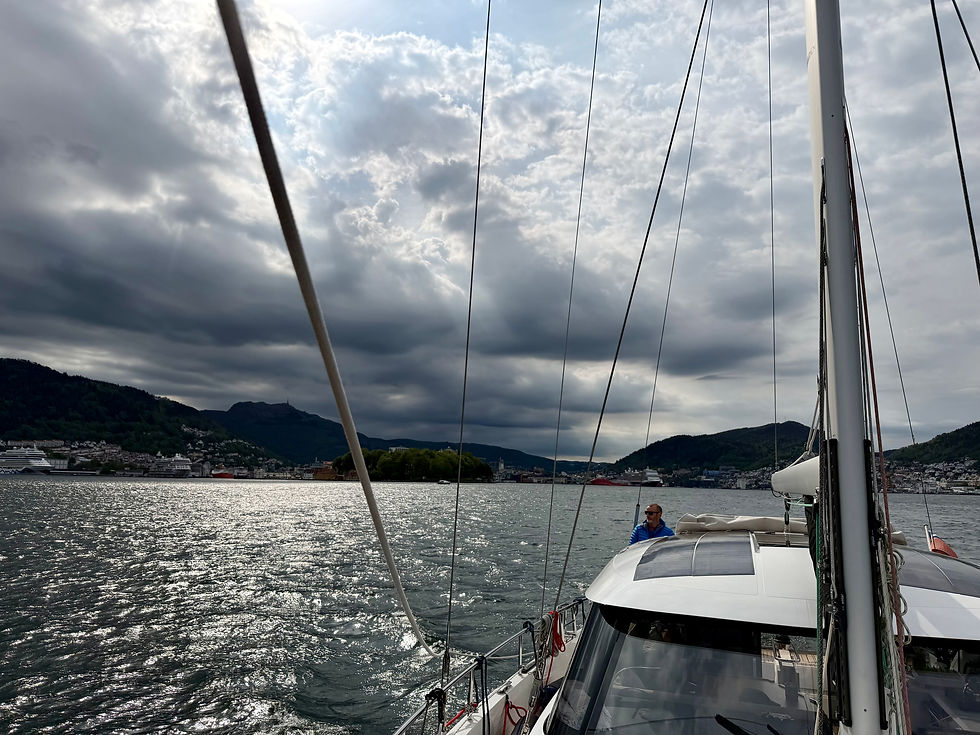
...and headed North along the calm waters of the inner leads of the fjiords - Buyfjord, Osterfjord, Radfjord - with some fine views of snow-capped mountains..


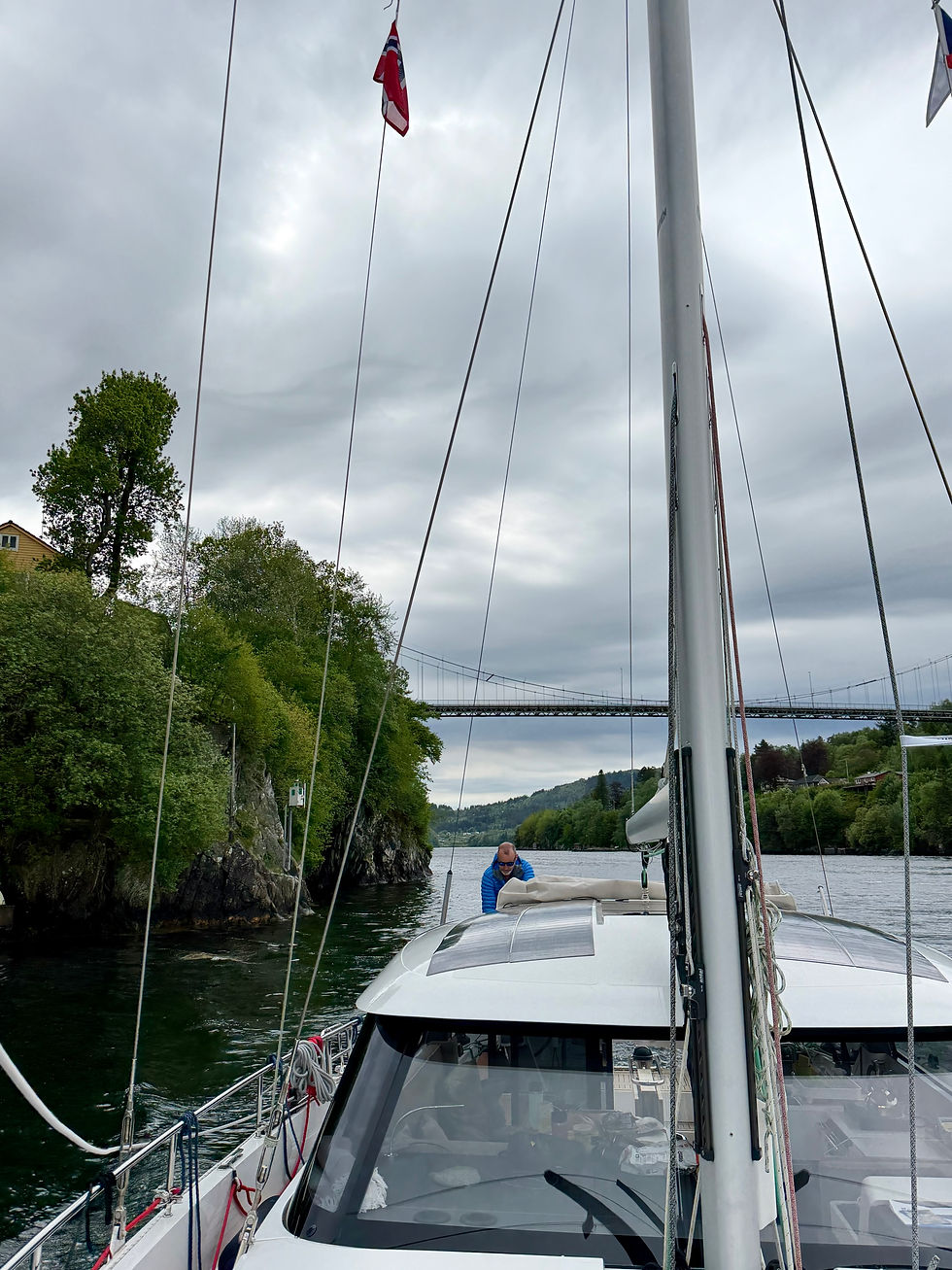
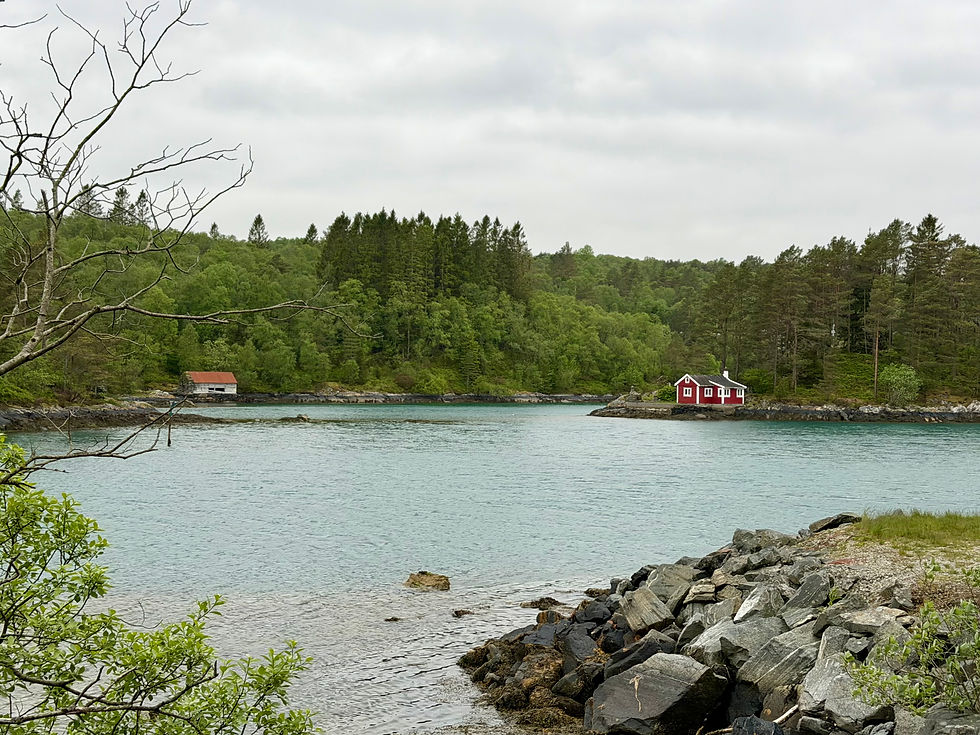
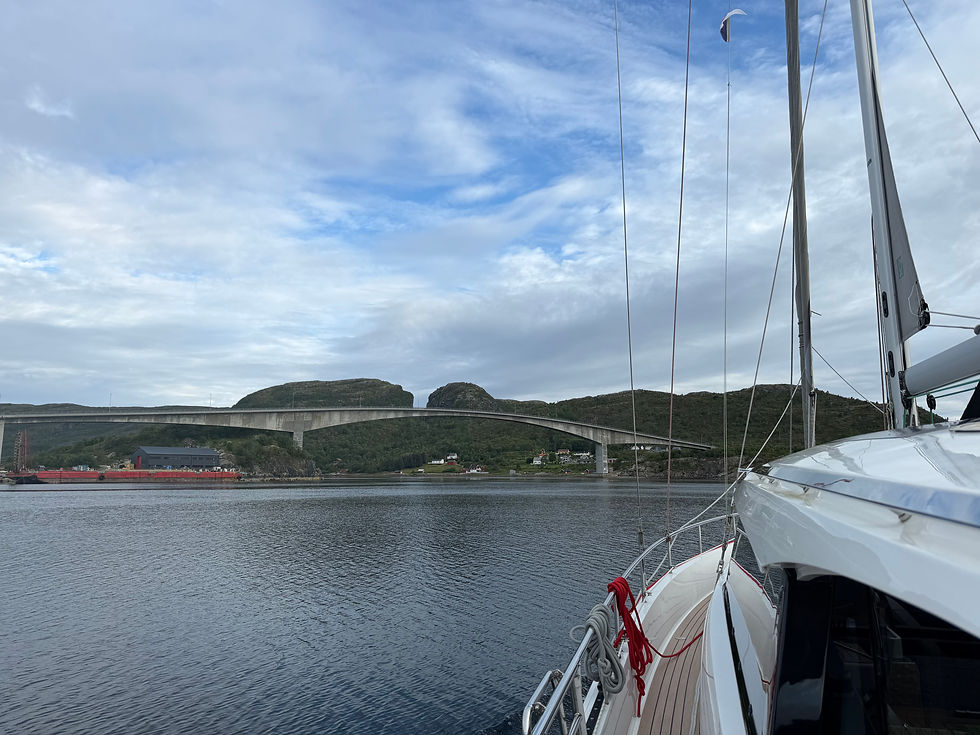
...Passing under a few bridges, and alongside some lovely and varied shore and boat houses ...

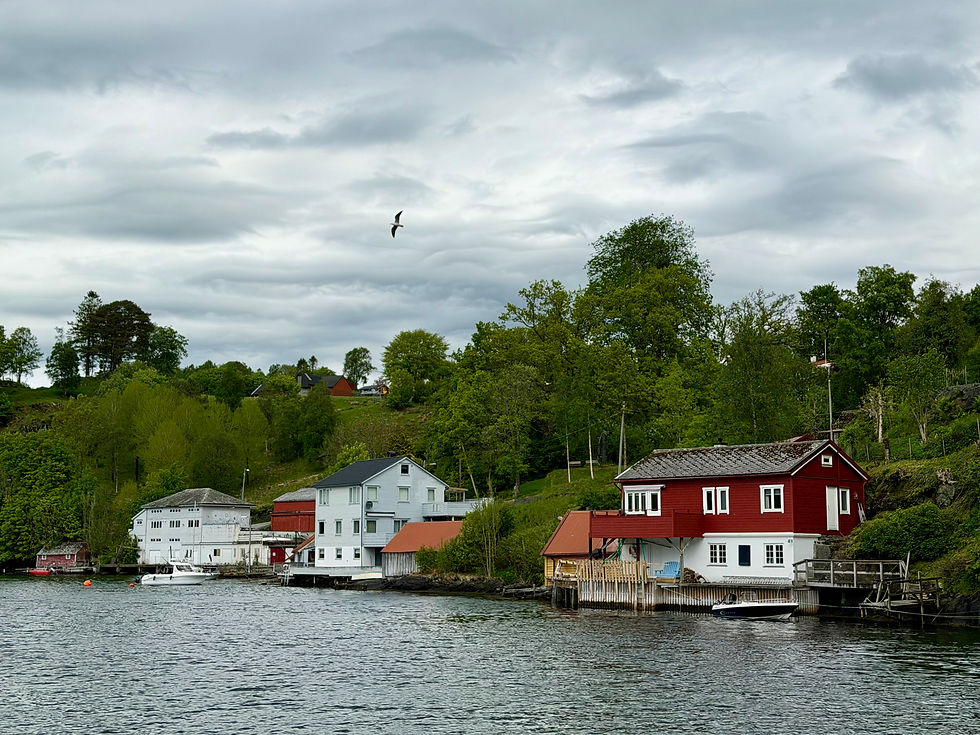

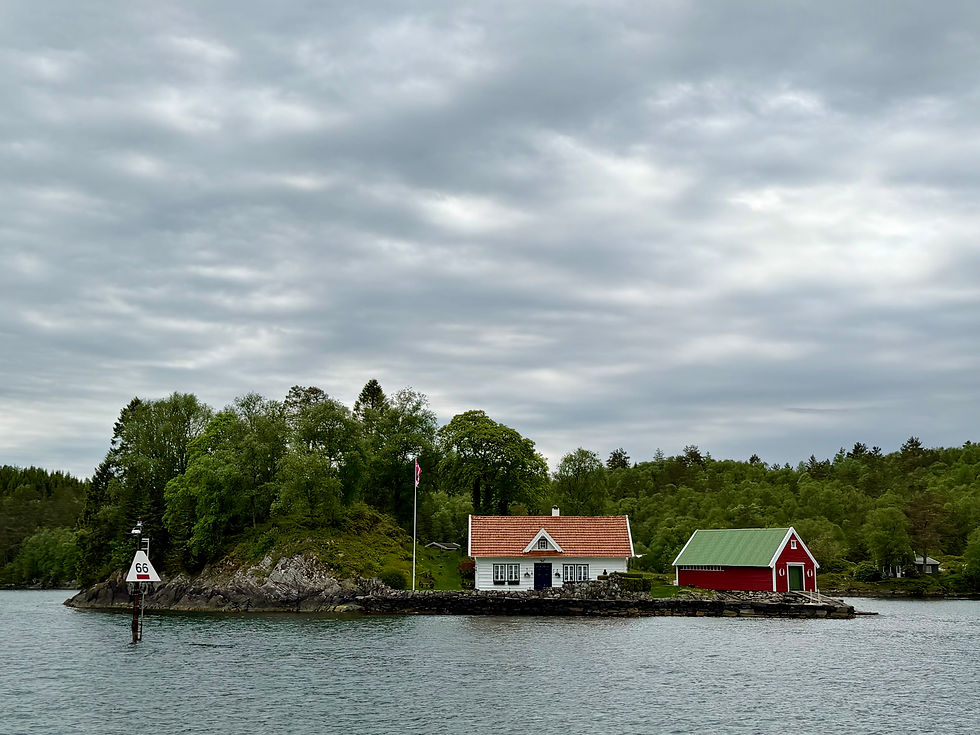

...taking sinuous paths through narrower openings...
...and marvelling at the fjiordlamps...


and amazing cloud formations...

...which looked like snow-capped mountains themselves...

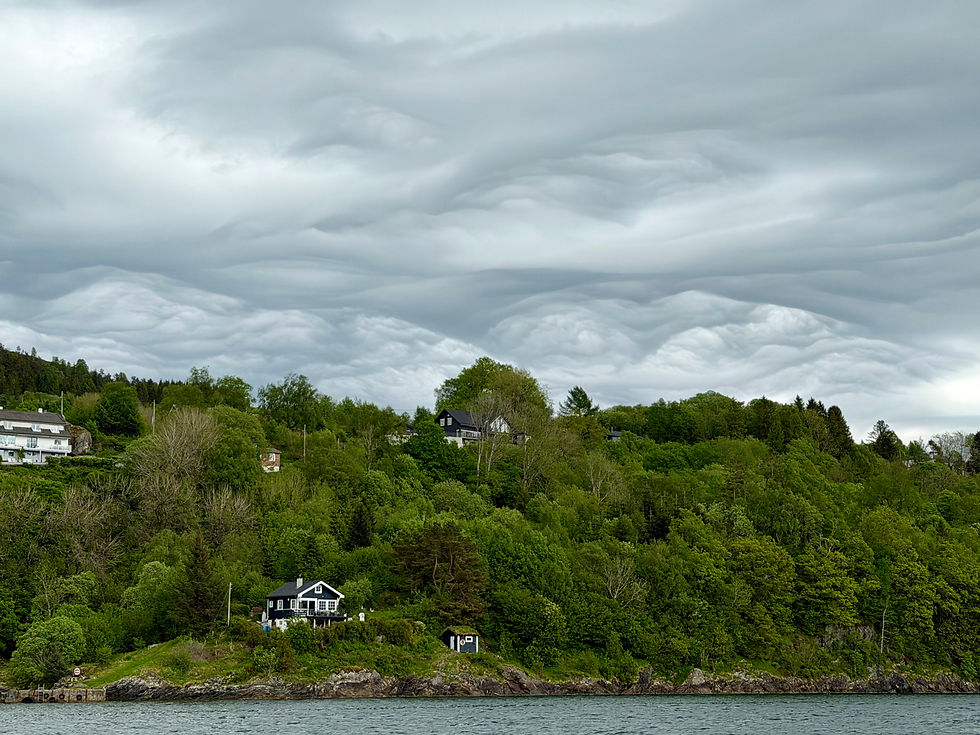
...and then we tied up on the outer pontoon at Feste...
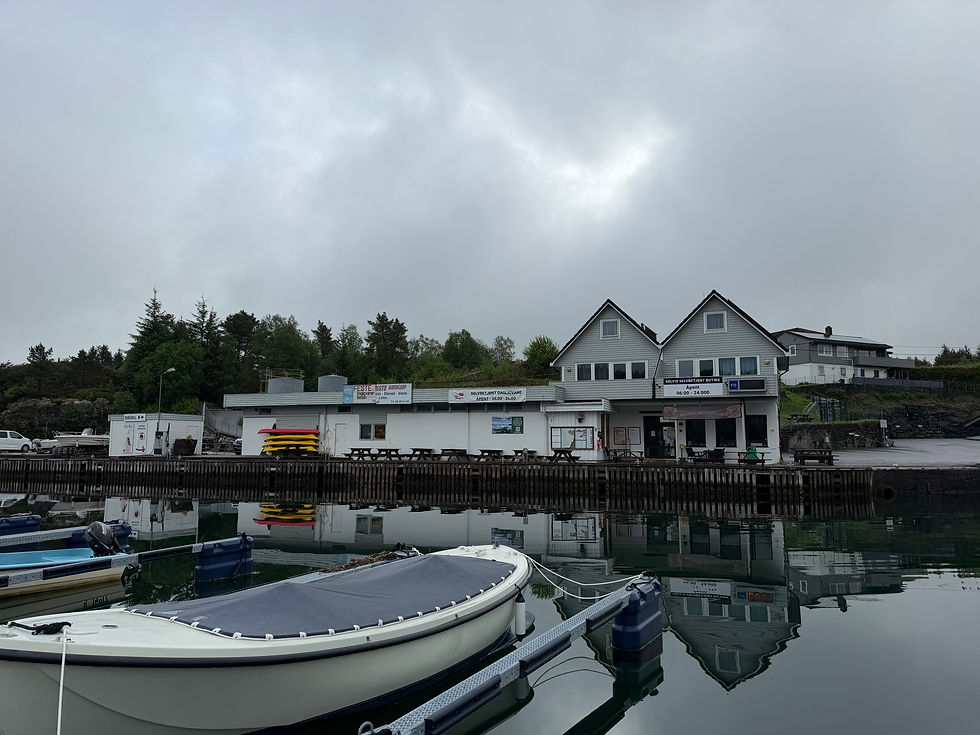
...and pulled out the electric bikes for their first outing...
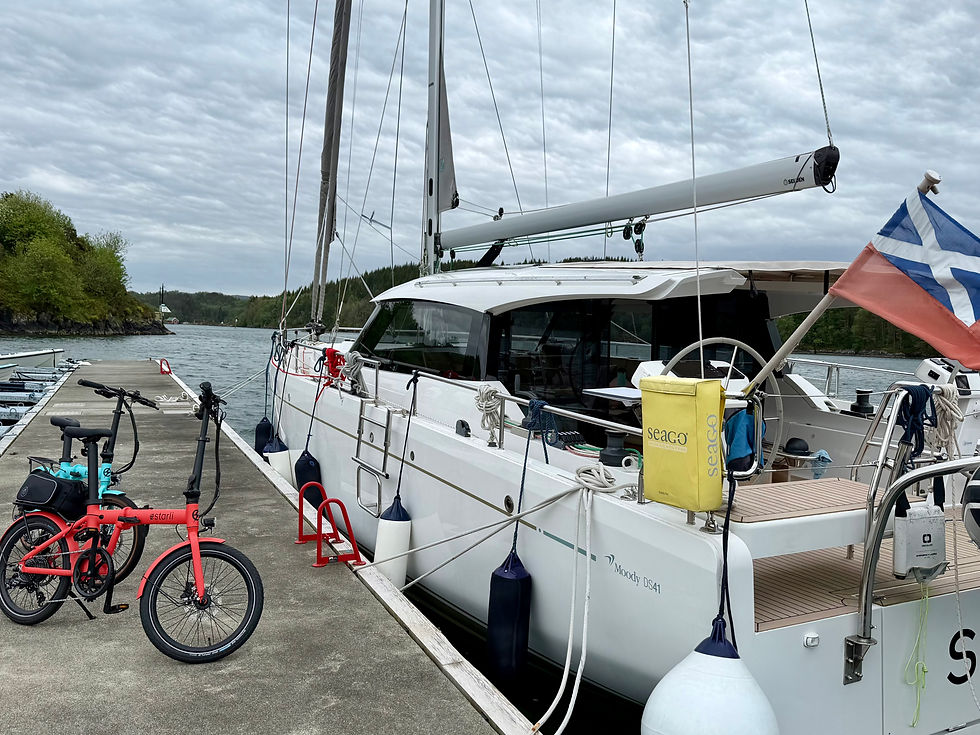
...a 20km round trip around the scenic Lurefjord ...


to 'Lyngheisenteret" Lygra, and its' "Heathland Centre"...

...The beautiful information building was built in 2000, and uses traditional regional building techniques - stone gable ends, untreated wooden walls, and grass, wood and slate roofs - and seamlessly nestles into the headland...


It had a great wee exhibition, as well an informative and enchanting documentary, made in the 1970's by a Bergen University professor. It followed an elderly brother and sister who were the last of their kind, farming as their parents and grandparents had done, on the heathland nearby. Maintaining the land in traditional back-breaking ways - cutting the heather with scythes, collecting and carrying it on their backs using rope and baskets. Controlled burning of the heather using rakes - reminiscent of the practices used on the Pentlands today. With no running water they collected and carried pails of water on a wooden yoke for their daily use and looked after the land and livestock with great love and care - using the nutrient-rich heather mixed with silage for winter fodder all chopped and mixed with a hand powered wheel and blade...
As well as the information in the centre building, it also has a 2km walk to immerse you in the living history of the cultural landscape, with the traditional techniques and management of the land ...restored peat houses...


... ancient breeds of livestock...

...and a fine example of the region's adaption to their mild winter climate of the coast which farmed both the land and the sea...
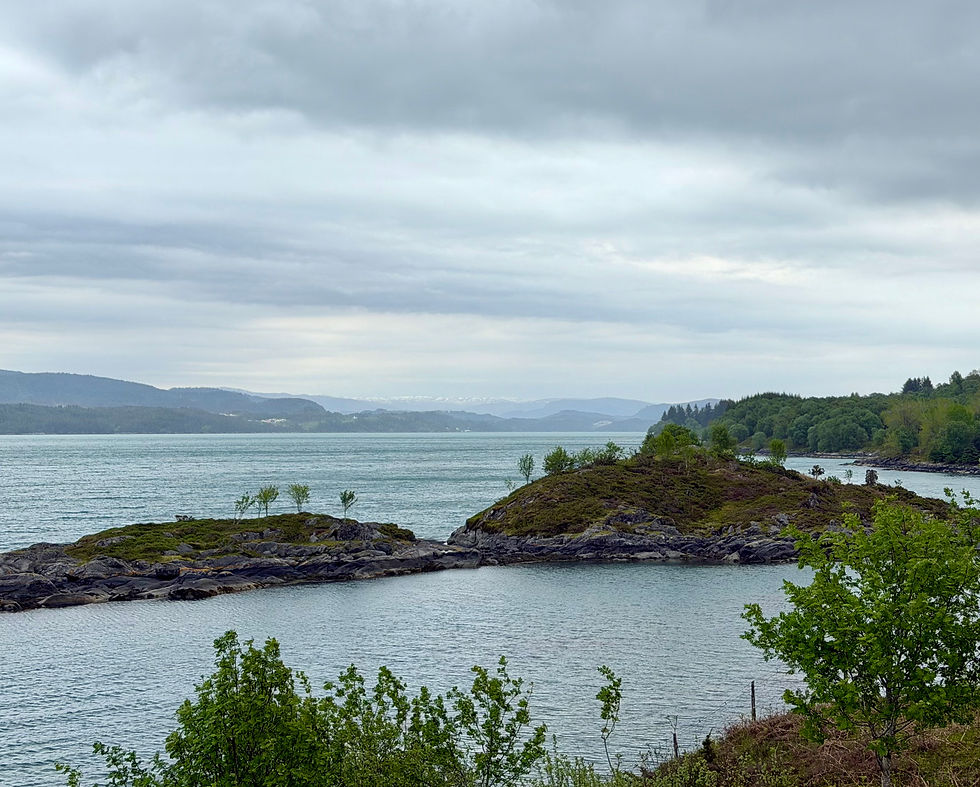
More than 400m deep Lurefjord is almost a closed basin, like a big 'saltwater lake' which can only be entered through narrow, shallow sounds. These special conditions have turned it into a giant marine aquarium with a rich supply of shellfish and herring and in the deeper parts there are large quantities of luminescent jellyfish!
Having thoroughly enjoyed the visit and walk we cycled back to the boat just ahead of the rain...

...and happily took shelter on board Sulaire and tucked in for the night.


Comments