Norwegian colour codes...
- pangani9
- Jun 6
- 2 min read
Day 37: Friday 5th June, 2026.
Floro
A quiet and rainy day for us, so just an hours round trip walk to visit Floro's Coastal and Cultural Museum...
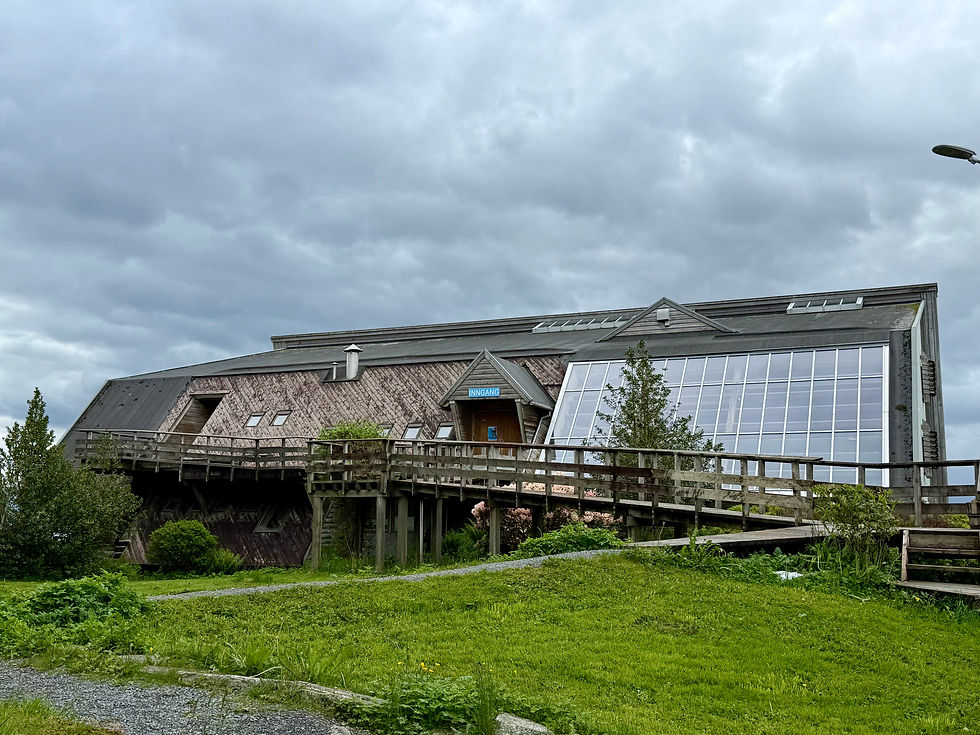
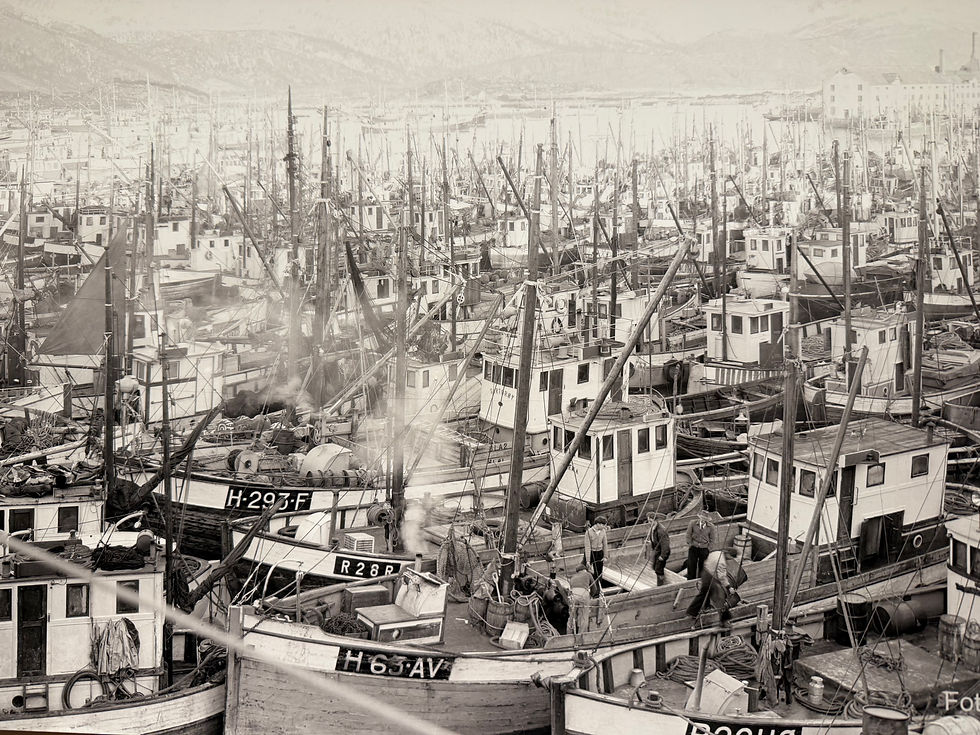
... where we learnt about Floro's past as a herring fishing hub, its population swelling from 50 people in 1850 to over 1000 in 1890...

Modern day Floro and its population of just over 9,000 people, now relies on the oil industry - it is a harbour for supply ships, and a helicopter base. Many of its residents work on platforms, tankers or supply ships. It is also a cultural tourist hub for visitors that want to visit its outlying islands like us.
The museum was a little underwhelming, perhaps due to the fact the new exhibition was still being curated, but the Captain enjoyed inspecting its collection of old boats..

...especially, the 'Bakkejetka'- the oldest 'jekt' (a type of boat) in Norway, built sometime before 1750...

...it was interesting to learn about the history of the colours of the houses we had been seeing , which were historically determined by a mix of socioeconomic status, regional geography and material costs. The strategic use of colour was no accident - it shaped the rhythm of Norway's fishing villages, making them visually legible spaces where architecture and function worked in harmony.

Falu red was historically the most affordable paint and the functional colour of industry- created by mixing iron or copper-rich ochre or fish blood with cod liver oil. It was breathable and waterproof, so excellent at protecting the timber against rot in the harsh coastal climates, and became the standard for farmhouses, barns and working-class fishing cabins...

Yellow paint was slightly more expensive to produce - and the yellow ochre was often used by affluent farmers, merchants and local businesses - the colour often signifying a commercial building.


Whilst white was the colour of wealth - the most expensive and luxurious colour as it required zinc oxide or lead which was only affordable for affluent coastal merchants, sea captains and clergymen.

The same traditonal colours are used today, along with blues and greens in a less socio economically prescriptive way.
So back to Floro harbour with an aesthetically enlightened eye we went, and had a nice wee lunch before going back to the boat to do some passage planning and readying for our departure tomorrow.


Comments